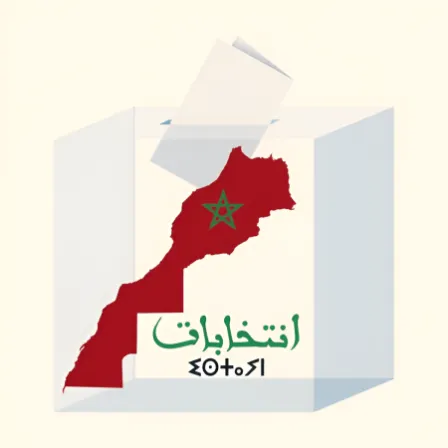
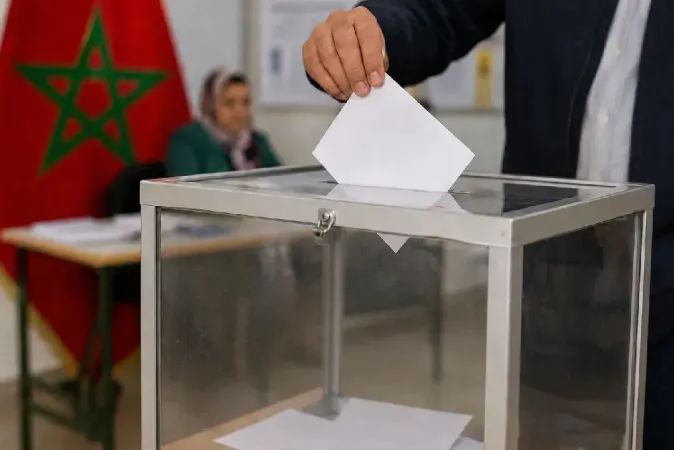
Moroccans are going to cast their votes on Wednesday to elect members of the House of Representatives, a crucial step toward renewing the composition of the Lower House (which comprises 395 seats), and drawing up the new political map that will help shape a future government coalition.
This election is a new milestone in strengthening Morocco's democratic framework and consolidating the State of institutions, as it will help bring in newly elected representatives capable of keeping pace with major national projects, addressing current socioeconomic challenges and meeting citizens' needs.
The number of registered voters on the general electoral rolls stands at 15,801,162. According to statistics published on the electronic site, the electorate comprises 54% men and 46% women.
Additionally, 1,850 candidate lists were submitted nationwide, covering all local and regional constituencies, according to data from the Interior Ministry compiled at the end of the candidacy period. These lists comprise 7,288 candidates, representing a national average of more than 18 contenders for each House seat.
In the same vein, electoral programs of political parties attach a great deal of importance to social issues, particularly preserving purchasing power and improving incomes.
The different visions put forward by political parties also stress the need to review direct aid mechanisms, expand social protection schemes and ease the tax burden on vulnerable groups and the middle class, in order to preserve social stability and mitigate the effects of inflation and price fluctuations.
On the economic front, the orientations proposed by the parties agree on the need to boost employment and support the business sector, seen as a key driver of growth. The various approaches emphasize creating job opportunities tailored to young people and women, as well as facilitating the integration of the informal sector.
They also provide for tax incentives and financing mechanisms for small and medium-sized enterprises and start-ups, with the aim of strengthening economic sovereignty and reducing unemployment.
With a view to ensuring the success of this electoral process and its conduct in a climate of equal opportunities among the various candidates, free from any practices that could undermine the credibility of the vote and the integrity of electoral competition, a body of legal provisions and procedural measures has been put in place to ensure the integrity of the electoral process and make it a vehicle for consolidating democratic practice.
The electoral framework for the September 23 legislative elections includes new provisions to uphold ethical standards in the electoral process and enhance its transparency, with the aim of restoring the role of political actors and rebuilding trust between citizens and elected institutions.
In particular, these regulations provide for stricter penalties for election violations: 28 out of 32 articles have been amended to increase prison sentences and fines, while certain severe offenses have been reclassified as felonies.
Candidacy is also prohibited for individuals prosecuted in flagrante delicto for offenses that undermine integrity, public morals, or the credibility of the electoral process. Similarly, individuals convicted of crimes in the first instance, as well as those convicted on appeal, lose their eligibility to hold office.
The new provisions also criminalize the use of social media, artificial intelligence tools, and electronic platforms in committing election offenses, particularly through disseminating and sharing "deepfakes" and "fake news," or manipulating images or statements with the intent to defame candidates or infringe on voters’ privacy. They also provide for eliminating alternative penalties applicable to election offenses related to elections for the House of Representatives.
In accordance with the High Instructions issued by His Majesty King Mohammed VI to the Minister of the Interior and the President of the Public Prosecutor’s Office, to ensure the smooth conduct of the legislative elections, the Central Election Monitoring Commission was activated, as were the provincial commissions composed of the Wali or governor and the King’s Attorney General or the King’s Prosecutor. Similarly, regional commissions have been activated to support the work of provincial commissions in each of the Kingdom’s twelve regions.
These commissions are responsible for taking the practical measures necessary to preserve the integrity and credibility of the electoral process and to monitor its progress, from the current phase all through result announcement, in strict compliance with the law and with no infringement to the prerogatives of the legislative, judicial, and administrative authorities.
In the same vein, the legislative elections on September 23 will be observed by several nongovernmental organizations as well as by national and international institutions, in order to help ensure the transparency and integrity of the electoral process.
The Special Commission for the Accreditation of Election Observers has thus granted accreditation to 3,006 observers, representing 26 nongovernmental organizations and one national institution (including 783 observers from the National Human Rights Council and 2,023 from Moroccan civil society organizations).
These observers will be deployed across the Kingdom’s twelve regions, in addition to 30 international, regional, and diplomatic bodies and organizations, to be represented by nearly 200 observers from various regions of the world.
All eyes will therefore be on the outcome of this legislative election and the results at the polls, which will shape the parliament composition and the next government, a government called upon to translate campaign promises into concrete public policies to support major initiatives and establish development-oriented governance up-to-par with the aspirations and expectations of the people in the next phase.
MAP: 22 September 2026