
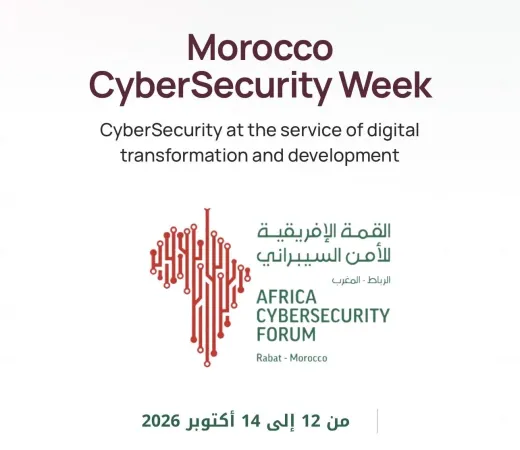
On High Royal Instructions, the General Directorate of Information Systems Security (DGSSI), of the National Defense Administration, is hosting on October 12-14 in Rabat, the “Morocco CyberSecurity Week.”
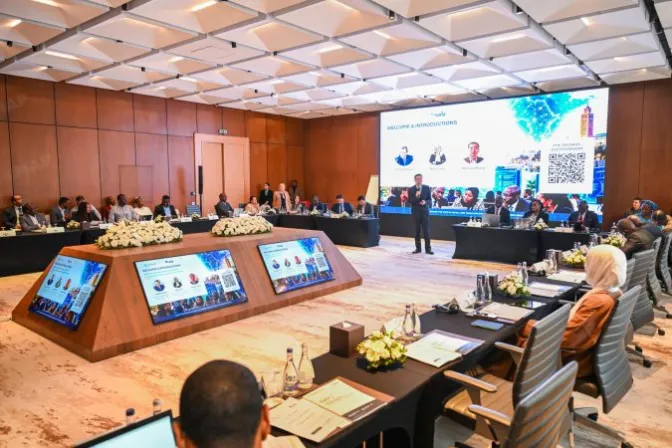
The opening session of this event included an address by Abdeltif Loudyi, Minister Delegate to the Head of Government in charge of the National Defense Administration, and was attended by government officials, including African ministers, as well as high-profile national and international figures, the National Defense Administration said in a statement.
Themed “Cybersecurity at the service of the digital transition and development,” this event showcases that these challenges are closely linked. In fact, cybersecurity is a key pillar for trust, and mandatory to create a safe environment that promotes the success of the digital transformation.
Over the course of three days, this event brings together decision-makers, experts, and cybersecurity professionals for a rich program featuring panel discussions and workshops. Discussions notably focus on the protection of critical infrastructure, the role of national strategies, skills and capacity building, the fight against cybercrime, cloud service security, and the contribution of AI to cyberspace security and resilience. The gathering also provides an opportunity to explore best practices and innovative solutions adopted at the international level.
In parallel, several workshops and training sessions are scheduled for experts and professionals from Morocco and other Arab and African countries, including a workshop led by the United Nations Institute for Disarmament Research (UNIDIR). A cybersecurity exercise is also planned in cooperation with the International Telecommunication Union (ITU), featuring the participation of representatives from around thirty countries.
The African dimension of this event is highlighted by an entire day dedicated to cybersecurity issues and challenges on the continent. In this regard, a workshop on cyberdiplomacy will be organized for African embassies accredited to Morocco, in cooperation with Smart Africa and the Moroccan Agency for International Cooperation (AMCI). Along the same lines, meetings of the African Network of Cybersecurity Authorities (ANCA) will be held on the sidelines of the event. These activities demonstrate the Kingdom of Morocco’s commitment to regional cooperation and dialogue in cybersecurity.
Beyond these activities, the event will also feature an exhibition area for national and international companies to present their cybersecurity solutions and services, as well as to seize networking and partnership opportunities.
In his opening remarks, Loudyi emphasized that protecting national information systems and strengthening their resilience has become a necessity in the face of digital transformations. He recalled that cyberattacks are no longer a hypothetical risk, but a reality facing all countries without exception, with artificial intelligence accelerating their impact.
He indicated that responding to these challenges requires a clear national vision structured around complementary pillars: a national strategy, a legal and regulatory framework, capacity development, awareness raising, enhanced detection and response capabilities, and regional Arab, African, and international cooperation.
Loudyi also presented the initiatives launched by the DGSSI in recent years, notably including the widespread deployment of security operations centers (SOCs), the strengthening of oversight and auditing, and the training of security managers.
Recalling that cybersecurity requires continuous effort and permanent vigilance, he cited four short-term priorities: training talent, supporting companies within the national cybersecurity ecosystem, protecting critical infrastructure, and addressing the challenges associated with artificial intelligence.
Finally, Loudyi stressed the shared responsibility of all stakeholders, whether from the public or private sector, in strengthening collective resilience, the press release concluded.
MAP: 12 October 2026