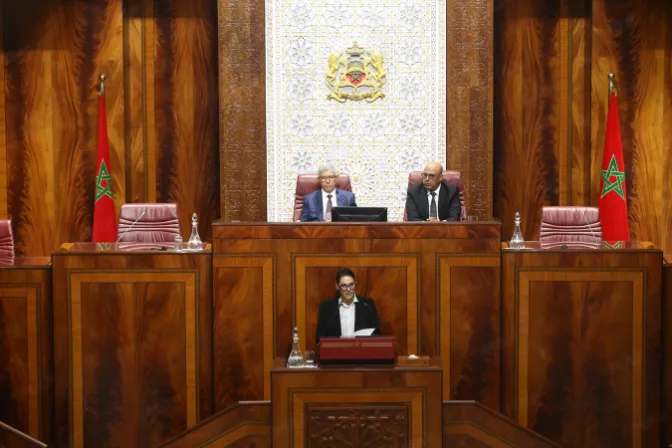

Morocco has emerged from a seven-year drought thanks to recent rainfall and snowfall, which have increased water supplies and dam fill rates, Minister of Equipment and Water Nizar Baraka said Monday in Rabat.
In response to question time at the House of Representatives, the minister explained that Morocco recorded 108 mm of rainfall from September 1 to January 12, 95% more than the previous year and 17.6% more than the usual average.
These indicators confirm that Morocco has overcome the drought, given that a dry year is one in which rainfall is more than 20% below average, whereas a positive surplus has been recorded this year, he noted.
The minister said that exceptional snowfall was recorded covering some 55,495 km2, before decreasing to nearly 25,000 km2 currently, with snow depths varying from one to two meters in mountainous areas above 2,500 meters.
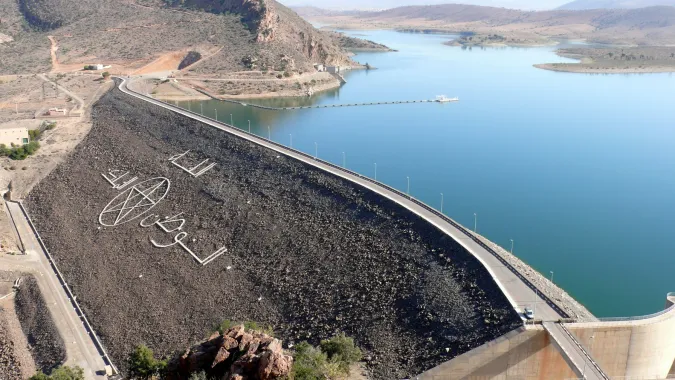
This situation has positively impacted water supplies, with dam fill rates rising from 28% during the same period last year to 46% currently, equivalent to 7.7 billion m3, while water inflows recorded between September 1, 2025, and January 12, 2026, reached 3.5 billion cubic m3, of which 3.1 billion m3 were recorded in the last month alone.
A positive impact on the water basins was also witnessed concerning the filling rate of several dams in eight water basins, where the reservoir reached 80% to 100%, said the minister, who reviewed the situation of several dams, including Oued El Makhazine, Charif Al Idrissi, Nakhla, Chefchaouen, and Ibn Battouta (Loukkos basin), Allal El Fassi, Bab Louta, and Bouhouda (Sebou basin).
Regarding the Sidi Mohammed Ben Abdellah dam (Bouregreg basin), which is 92% full, water has been released to prevent excess of capacity, he said.
This improvement also affected several other basins, including those of Oum Er-rabia, Tensift, Souss-Massa, and Moulouya, in addition to the Ziz-Rhéris basin, where the fill rate of the Hassan Addakhil dam stood at 71.5%, he noted, adding that 37 other small dams had a fill rate of over 100%, making it necessary to release water.
These water supplies provide an average of one year's worth of drinking water at the national level, Baraka said, who believes this is a positive indicator providing additional margin. In this regard, he emphasized the ongoing water desalination policy, with the launch of new plants in Nador, Driouch, and Tangier, as well as plans for other plants next year in Souss-Massa, Tiznit, Guelmim, Tan-Tan, and Rabat.
Finally, the minister reaffirmed the ongoing efforts, in accordance with the High Royal Guidelines, to complete the "water highway" connection projects between the water basins, which will extend from Oued Laou and Loukkos to Oum Er-rabia, with the start, this year, of the Sebou basin connection to those of Bouregreg and Oum Er-rabia.
MAP: 13 January 2026