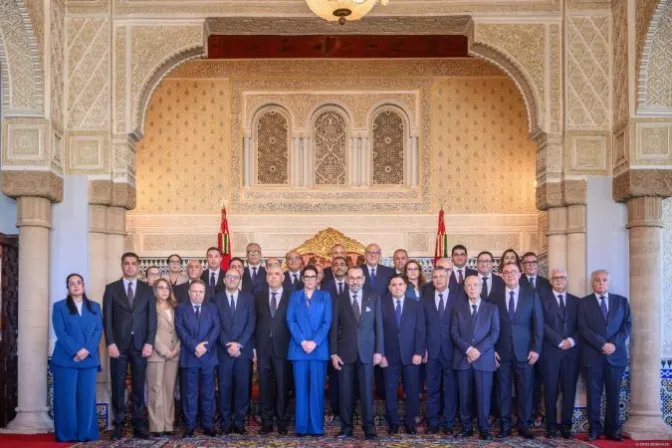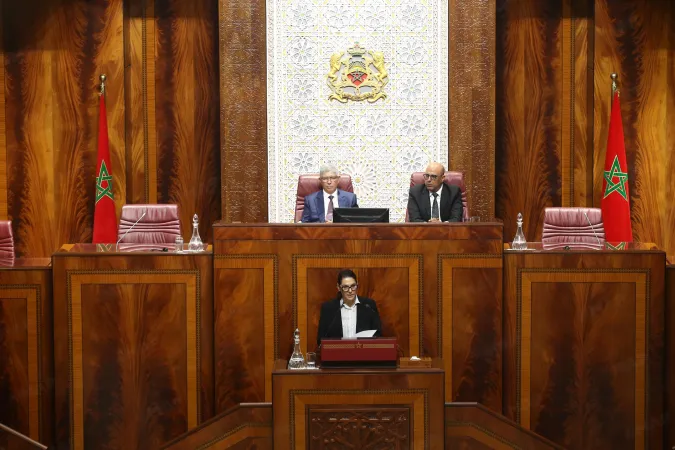
Head of Government Fatima Ezzahra El Mansouri said on Monday that the Government Program is a political and institutional contract based on the High Royal Trust and the will expressed by citizens in the legislative elections held on September 23.
The government "is fully aware of the scale of this responsibility and the importance of upcoming key stages," El Mansouri said before both Houses of Parliament during a joint plenary session for presenting the Government Program, pledging "to remain attentive, to be truthful about the available resources and constraints, and to translate commitments into achievable programs."
She said that the success of the Government "depends on our cooperation with Parliament, respect for its legislative, oversight and evaluation roles, as well as optimal management of political and legislative time by both the majority and the opposition, each according to its respective position."
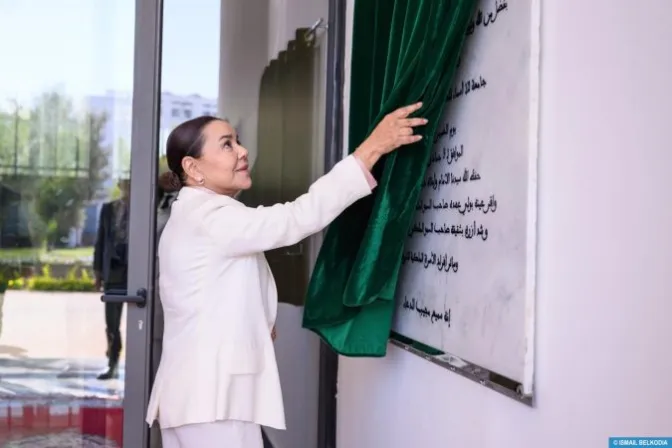
Reiterating her sincere thanks and profound gratitude to His Majesty King Mohammed VI, may God assist Him, for His High Royal Trust by appointing her as Head of Government, El Mansouri said that this appointment was an honor reflecting the Sovereign's High Care for Moroccan women. On behalf of herself and Moroccan women, she expressed her pride in this trust and her firm determination to take on this responsibility in the service of the country and its supreme interests.
El Mansouri said that this legislative term is a pivotal stage in the reform process pursued by His Majesty the King over the past 27 years, which combines state Stability, modernizing institutions, expanding rights, regular elections and the rotation of responsibilities. She recalled that the 2011 Constitution, which enshrines the democratic choice, makes the appointment of the Head of Government contingent on election results, strengthens judicial independence, consolidates Parliament’s role, establishes gender parity, and promotes good governance and citizen participation, while also enshrining the principle of linking responsibility with accountability, as well as balance and cooperation among the branches of government.
El Mansouri also noted that advanced regionalization has opened up broad prospects for development championed by the regions, explaining that this approach makes Morocco a model combining stability and reform, in which the constitutional Monarchy guarantees the continuity and unity of the State, while the popular will forms the basis for the formation of the majority and the exercise of responsibilities.
The September 23 legislative elections, which build on this momentum, confirmed the maturity of Morocco’s democratic practice through the ballot box. During this process, Moroccans expressed their aspirations for safeguarding their purchasing power, opening new prospects for young people, improving public schools and hospitals, reducing territorial disparities, and protecting the country’s needs in water, energy and food products, she added.
She affirmed that the majority would work to translate these expectations into concrete policies, in a spirit of cooperation and balance among the branches of government, while remaining open to economic, social and territorial stakeholders.
El Mansouri further maintained that Morocco has implemented major reforms and projects, reinforced its presence on the African and international stages, and consolidated its capacity to withstand crises. However, she noted that the benefits of this progress had not been distributed equally among all social groups or regions. Employment, purchasing power, service quality and territorial justice remain at the heart of citizens’ expectations, hence the government’s determination to move from expanding social coverage to improving the quality of services, from increasing investment volumes to enhancing their returns, and from multiplying programs to ensuring their complementarity and impact.
For the government, the next five years offer an opportunity to preserve achievements, complete ongoing projects, address shortcomings and focus State resources on priorities with tangible effects on citizens' daily lives, including employment, living conditions, education, access to healthcare, housing and territorial development, El Mansouri noted.
The Head of Government said that this legislative term comes amid a less stable and more competitive international context, adding that geopolitical tensions are reshaping trade and energy routes, while protectionist policies are encouraging the relocation of production chains.
While digital transition and artificial intelligence are transforming the nature of jobs and added value, climate change is placing increasing pressure on water resources, agriculture and food security, she added.
In this regard, Morocco’s assets, including proximity to European markets, African roots, Atlantic coastline, institutional stability, basic infrastructure and industrial platform, position the Kingdom to attract new investment, increase exports and integrate into emerging sectors, El Mansouri pointed out.
"The government’s mission, alongside various stakeholders, is to transform these opportunities into a genuine lever for advancing Morocco’s ambition to become an emerging economic power, committed to ensuring a harmonious balance between economic growth and bolstering social justice," she concluded.
MAP: 19 October 2026